The Relevance of Court Reporting in Ensuring Accurate Legal Process
Court reporting is a critical part of the lawful system. It provides a impartial and precise record of court room tasks. This documents is vital for appeals and lawful research study, making sure that every spoken word is caught accurately. The integrity of legal procedures relies heavily on these records. The role of modern technology and advancing methods raises concerns about the future of court reporting and its impact on justice. What changes exist in advance?
The Duty of Court Reporters in the Legal System
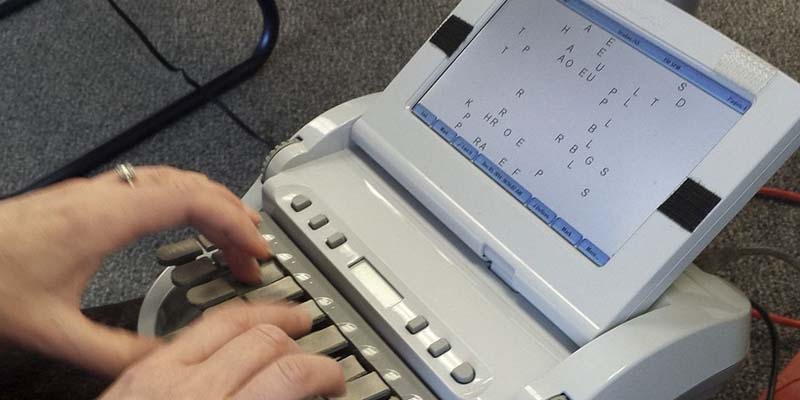
Stenotype reporter play a necessary duty in the legal system by supplying accurate and neutral transcripts of process. Their job warranties that court room discussions, witness statements, and lawful disagreements are consistently documented, working as a main record for future recommendation. This documentation is crucial for appeals, lawful research, and keeping the integrity of judicial processes. Stenotype reporter are trained experts competent in stenography and numerous taping innovations, enabling them to record talked words with accuracy. They should possess an extensive understanding of legal terms and courtroom procedures, assuring that their transcripts fulfill the criteria needed by the judicial system. Furthermore, they might supply real-time transcription services, permitting lawyers and judges to accessibility details instantly throughout proceedings. By meeting these responsibilities, stenotype reporter assist in transparency, accountability, and the fair management of justice, thus strengthening the fundamental concepts of the lawful system.
Making Certain Accuracy in Transcription
Accuracy in transcription is extremely important for keeping the stability of legal proceedings. Stenotype reporter meticulously record every word spoken throughout tests, hearings, and depositions, ensuring that the official document reflects real dialogue and exchanges that happen. This precision is vital, as even minor errors can lead to significant misconceptions or misinterpretations of the law.
To attain this level of accuracy, stenotype reporter utilize various strategies, including active listening and using specialized shorthand techniques. Continuous training and familiarity with lawful terminology likewise enhance their ability to create dependable records.
Furthermore, the verification process is vital; reporters typically assess their transcripts for prospective inconsistencies before final entry. This persistance not just supports the quality of lawful documentation yet likewise supports the judicial procedure, allowing judges and attorneys to reference precise documents when making choices. Inevitably, accurate transcription promotes rely on the lawful system and warranties that justice is served.
The Impact of Technology on Court Reporting
As modern technology remains to develop, its impact on court reporting has actually come to be increasingly significant. Digital videotaping systems and speech acknowledgment software application have changed conventional techniques, offering brand-new devices for capturing talked dialogue. These advancements boost performance and accessibility, making it possible for much faster transcription and real-time reporting. In addition, cloud-based systems facilitate seamless sharing of records, enhancing cooperation amongst attorneys.

Ultimately, while technology boosts the speed and ease of access of court reporting, it underscores the demand for human oversight to preserve the high quality and accuracy essential for legal procedures. As the field proceeds to adjust, the integration of innovation will certainly play a crucial function in forming the future of court reporting.
The Importance of Confidentiality and Integrity
Discretion and integrity are basic concepts that underpin the practice of court reporting in legal proceedings (durham court reporting). Court reporters are handed over with sensitive information, requiring them to keep discretion and secure the personal privacy of all parties entailed. This privacy promotes a relying on environment where witnesses and litigants can speak freely, making certain that the lawful procedure is reasonable and simply
Honesty is similarly important; court reporters need to provide unbiased and precise transcripts, functioning as the official record of the proceedings. Any type of lapse in integrity can bring about misconceptions, possibly impacting case results and undermining the judicial system.
Future Patterns in Court Reporting
The landscape of court reporting is progressing in reaction to technological advancements and the changing requirements of the legal profession. Arising trends include the combination of synthetic knowledge and real-time transcription solutions, which enhance efficiency and accuracy. Court press reporters are progressively using electronic devices, such as cloud-based platforms, enabling for seamless cooperation among legal groups and less complicated accessibility to transcripts.
In addition, the surge of remote court procedures has prompted the development of specialized training for press reporters in virtual settings. This shift not just adjusts to the demands of a globalized legal landscape but additionally addresses challenges postured by geographical obstacles.
Moreover, the focus on access is driving advancements in transcription formats, ensuring that lawful records satisfy diverse audiences. On the whole, the future of court reporting is identified by a blend of typical abilities and modern-day technology, placing reporters as crucial players in the legal procedure.
Regularly Asked Questions
What Certifications Are Called For to Come To Be a Court Press Reporter?
To end up being a court press reporter, individuals usually call for a secondary school diploma, specialized training in court reporting, effectiveness Web Site in shorthand or voice writing, and certification or licensing, depending upon the jurisdiction and particular task demands. - durham court reporting
Just How Do Court Reporters Maintain Their Skills Over Time?
Court reporters maintain their abilities in time via continuous education, method, and involvement with specialist organizations. They often go to workshops, utilize innovative technology, and participate in certification programs to boost their efficiency and adapt to progressing requirements.
What Obstacles Do Court Reporters Face in Their Occupation?
Stenotype reporter encounter numerous challenges, including handling high-pressure find more environments, adapting to diverse accents and languages, preserving technical efficiency, making sure precision under tight due dates, and managing psychologically charged testaments that may affect focus and performance.
Are Court Reporters Associated With Various Other Lawful Settings Besides Courtrooms?
Court reporters are indeed entailed in numerous legal settings past courts, consisting of depositions, mediation hearings, and management proceedings. Their experience assurances exact records in these environments, adding to the clarity and integrity of lawful documentation.
Just How Do Court Reporters Handle Stressful Situations Throughout Process?

Court reporters handle difficult circumstances by preserving emphasis, utilizing efficient time monitoring abilities, and utilizing their training to continue to be tranquil. They often practice deep breathing and use methods to decrease interruptions, ensuring precise paperwork under stress.
Court reporting is an essential element of the legal system. Court press reporters play an essential function in the lawful system by giving impartial and accurate records of procedures. Ultimately, while innovation improves the rate and accessibility of court reporting, it underscores the demand for human oversight to preserve the quality and precision necessary for lawful procedures. Privacy and stability are basic concepts that underpin the practice of court reporting in lawful procedures. Court reporters are Check Out Your URL indeed involved in different legal setups beyond court rooms, consisting of depositions, arbitration hearings, and management process.